Install environment · Garden-style apartments
GL-xTH-RPF in a garden-style community
Internet to every apartment over the phone pairs already in the walls. One sealed host per breezeway, powered by its tenants' clients; each tenant moves over when they sign up.
- Still on the telco terminals 20
- Copper tails in use 0 / 20
- Hosts powered by tenants 0 / 3
- Existing phone pairs
- ReadyLinks data over the pair
- Power back up the pair (RPF)
- Fiber from the leasing office
How the install works
Day 0: one visit per building
A sealed GL-8xTH-RPF or GL-4xTH-RPF goes on the breezeway wall beside the telco terminal, with its copper tails punched down on a new block, one per apartment. Fiber comes in through underground conduit from the leasing office. There's no outlet, and nobody's service changes yet.
A tenant signs up
At the terminal, the technician moves that apartment's cross-connect from the phone company's pair to the host's tail. In the unit, an IPC-1T-RPF-POE connects to the phone jack and sends power back up the pair, so the host runs on its tenants' power.
One pair, one apartment
Twisted pair is point to point: each apartment keeps its own dedicated pair to its own host tail, with no splitters. An eight-unit building takes a GL-8xTH-RPF and a four-unit building a GL-4xTH-RPF.
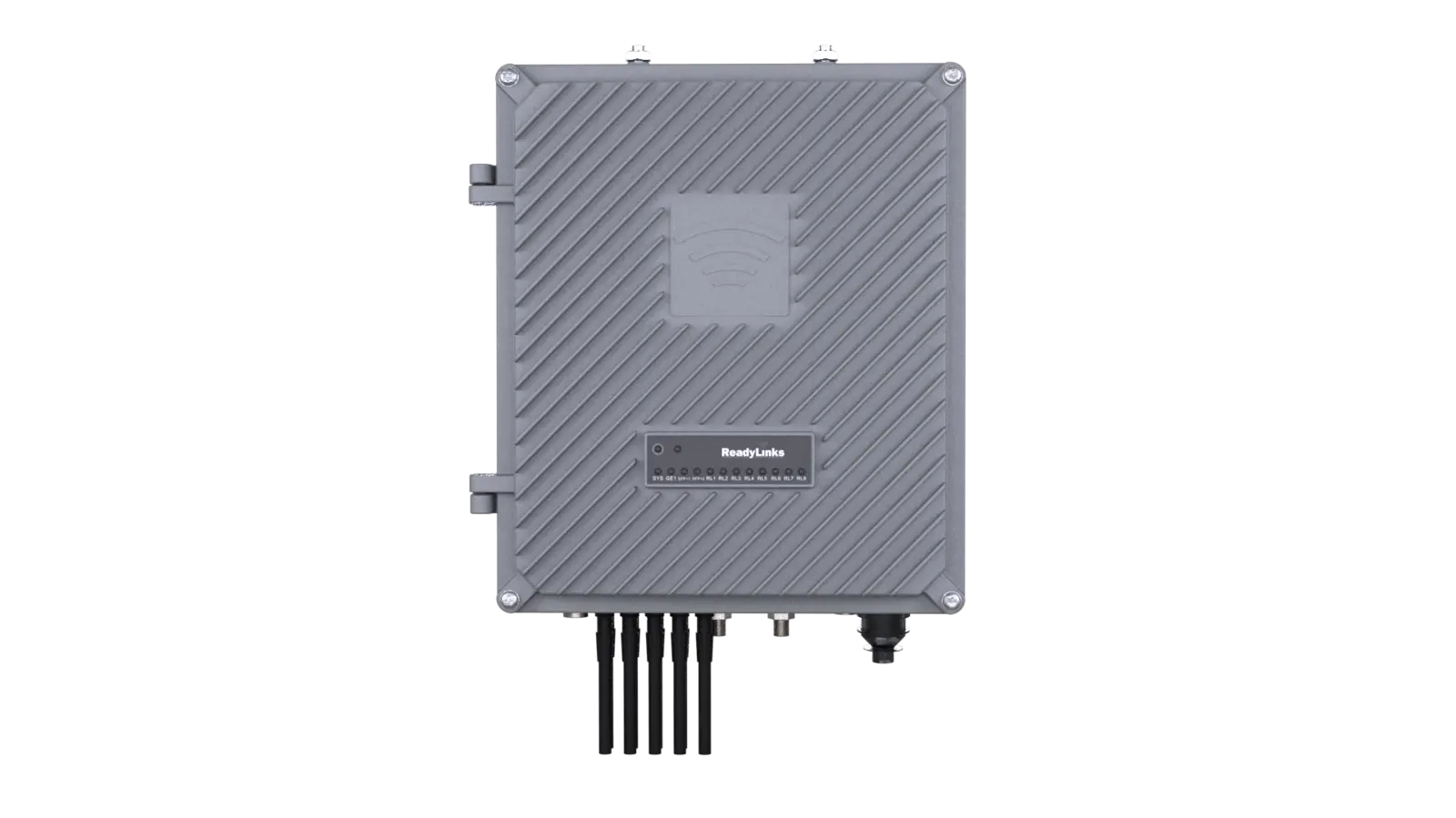
In the breezeway
The GL-8xTH-RPF and GL-4xTH-RPF
Sealed IP67 ReadyLink hosts for places with no power and no closet. Each has eight or four ReadyLink copper tails, one per apartment's phone pair, and two 10G SFP+ ports for the fiber uplink. They take power from reverse power feed over the pairs, from a PoE+ PD tail, or over USB-C, and run from -20 to 50 °C.
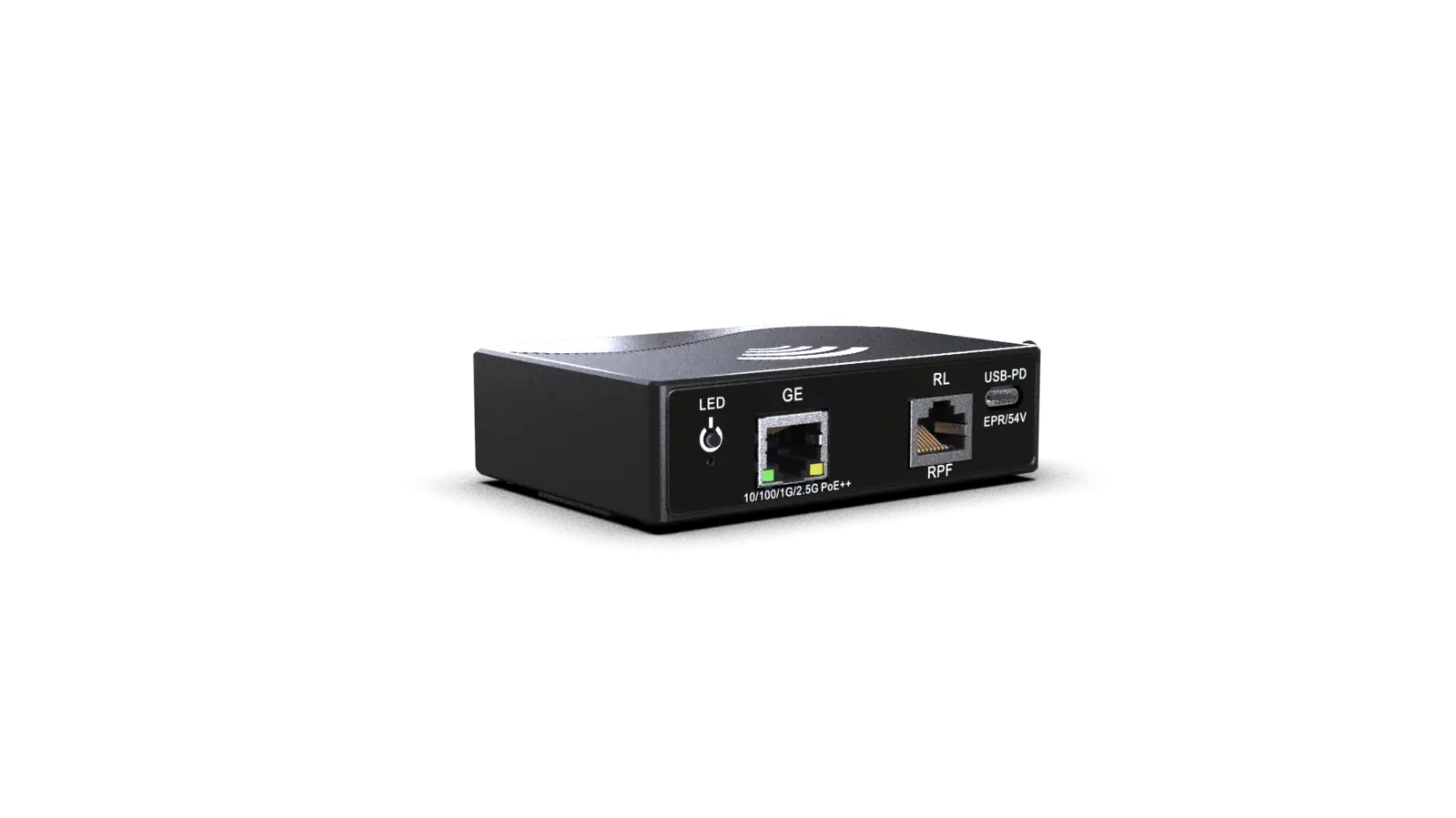
In the apartment
An RPF client on the phone jack
The phone jack in each apartment connects to an IPC-1T-RPF-POE, which turns the ReadyLink signal back into Ethernet on a 2.5GbE port with PoE++ (up to 90 W) for the tenant's router or Wi-Fi access point. Plugged in at the apartment, it also sends power back up the pair to the host in the breezeway. It is provisioned and monitored from its host in ReadyView.
Representative install. The hosts and clients are drawn larger than life so they read next to the buildings, and the community is shown as three buildings in a row. Actual terminal layout, cable runs and how many apartments each building has depend on the property's phone wiring.